Automate vehicle identification, access control and traffic monitoring with AerWatch® AI-powered licence plate recognition and vehicle analytics.
AerWatch captures and processes vehicle licence plates in real time, creating searchable records that can support access automation, security investigations, parking operations and traffic analysis.
As AerVision’s Value-Added Distributor in Qatar, QRTD supports system integrators and technology partners with solution architecture, licensing, demonstrations, proof-of-concept coordination, technical enablement and manufacturer support.

Transform Vehicle Monitoring with Vision AI
Conventional vehicle-entry procedures often depend on security personnel, access cards, remote controls or manually maintained registration lists.
These processes can become inefficient when organisations need to monitor large numbers of vehicles, multiple entrances or distributed facilities.
AerWatch adds an intelligent video analytics layer to existing surveillance systems. It automatically reads licence plates, associates them with the corresponding video event and compares them against configured lists and rules.
This enables organisations to automate routine vehicle checks while maintaining a searchable visual record of activity.
Real-Time Licence Plate Recognition
AerWatch Licence Plate Recognition, also known as LPR or Automatic Number Plate Recognition, analyses video from suitably positioned cameras and extracts visible registration numbers.
Each recognised plate can be associated with:
- Date and time.
- Camera location.
- Entrance or exit point.
- Vehicle image.
- Relevant video footage.
- Access or alert outcome.
- Configured vehicle group.
This creates a central record that can be searched and reviewed without relying on handwritten gate logs or manual video inspection.
AerVision states that AerWatch records recognised plates with timestamps, camera locations and optional vehicle snapshots.
Automated Vehicle Access Control
AerWatch can support automated access decisions by comparing detected licence plates with authorised vehicle lists.
When an approved plate is detected, the event can be used within a wider workflow to:
- Verify an authorised vehicle.
- Notify a security operator.
- Trigger a gate-control process.
- Record the vehicle’s arrival.
- Register entry or exit.
- Associate the access event with video evidence.
The exact access-control workflow depends on the gate equipment, integration requirements and security procedures of the customer.
Licence plate recognition can complement existing access cards, intercoms and guard procedures rather than necessarily replacing them.
Whitelists, Blacklists and Vehicle Groups
Recognised plates can be organised into groups according to the organisation’s operational requirements.
Typical groups may include:
- Authorised employees.
- Registered visitors.
- Contractors.
- Delivery vehicles.
- Service providers.
- VIP vehicles.
- Temporary permits.
- Restricted vehicles.
- Vehicles of interest.
- Blacklisted plates.
AerWatch checks detected plates against the configured lists in real time.
A recognised vehicle can therefore initiate an approved workflow, while an unknown, restricted or blacklisted vehicle can generate an alert for operator verification.

Entrance and Exit Logging
AerWatch can maintain a digital record of vehicles entering and leaving monitored locations.
This can help organisations answer operational and security questions such as:
- When did a particular vehicle enter?
- Which entrance did it use?
- Has the vehicle left the site?
- How frequently has it visited?
- Was it authorised at the time?
- Which camera recorded the event?
- Is associated footage available?
- Did the vehicle travel through an unexpected route?
Automated entry and exit records can improve traceability and reduce dependence on manually maintained registers.
Vehicle Search and Investigation
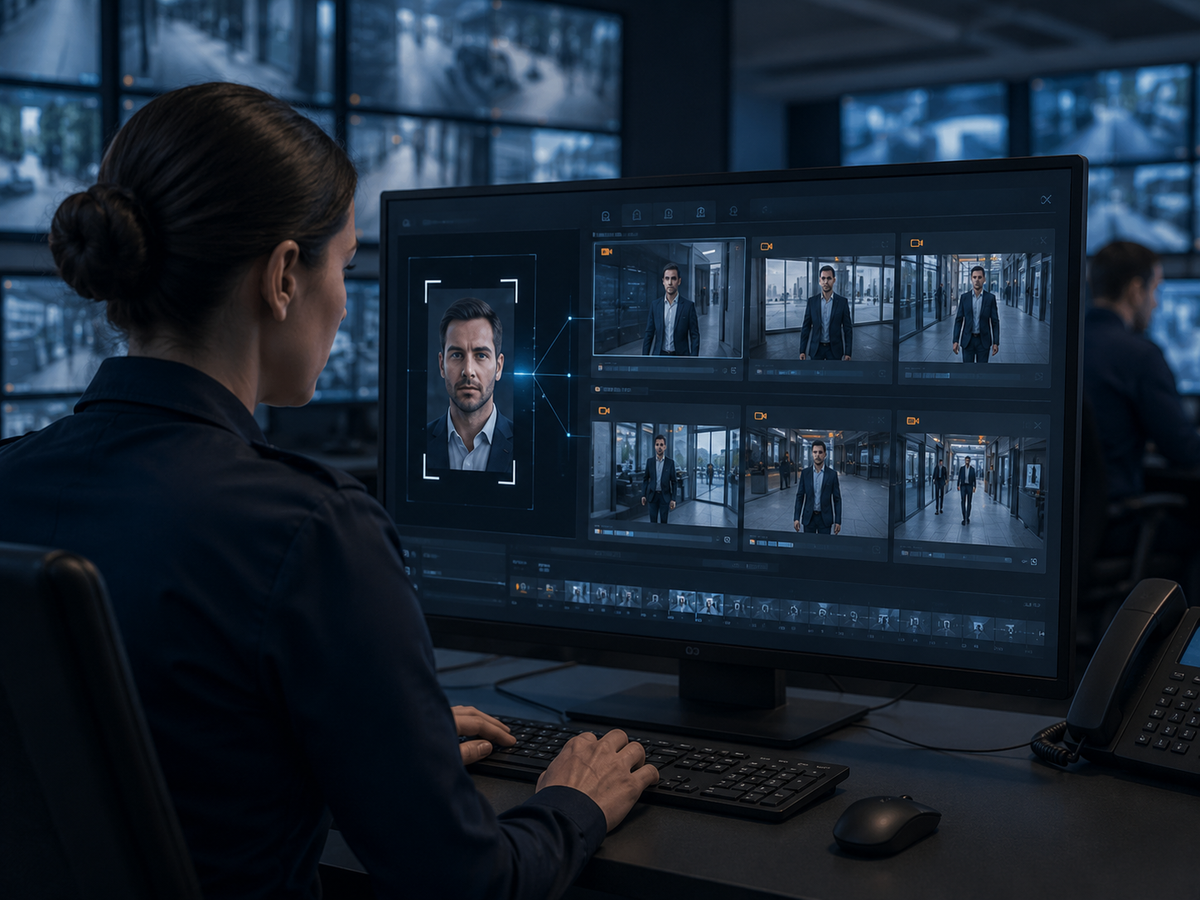
Licence plate information can make recorded CCTV footage easier to investigate.
Instead of manually reviewing hours of video, authorised users can search for a known plate or examine events from a selected time, camera or location.
Depending on the implemented configuration, investigation workflows may include:
- Searching for a complete licence plate.
- Reviewing plates captured during a specified period.
- Filtering events by entrance or camera.
- Reviewing the associated vehicle image.
- Opening the corresponding recorded footage.
- Identifying repeated visits.
- Checking whether a plate belonged to a configured group.
- Exporting relevant event information.
This can support security investigations, parking disputes, access audits and incident review.

Integration with Video Management Systems
AerWatch can integrate licence plate events into the customer’s video surveillance environment.
Operators can review detected plate numbers, event information and associated footage through the configured workflow rather than operating completely separate systems.
Depending on the selected VMS and integration design, operators may be able to:
- View licence plate events with live video.
- Search recorded events.
- Review plate numbers and access outcomes.
- Display the relevant camera.
- Retrieve associated footage.
- Receive security alerts.
- Export information for reporting or investigation.
AerVision states that AerWatch can display plate events, numbers and access outcomes within VMS environments and is designed for compatibility with leading video platforms.
Vehicle Counting and Traffic Flow Analytics
Licence plate recognition can be combined with broader vehicle analytics.
AerWatch can count vehicles moving through entrances, roads, lanes and controlled zones, helping organisations understand traffic volume and movement patterns.
Vehicle analytics can support:
- Entry and exit counts.
- Traffic-volume measurement.
- Peak-period identification.
- Lane-use analysis.
- Direction-of-travel monitoring.
- Congestion identification.
- Resource planning.
- Operational reporting.
AerWatch officially includes vehicle traffic counting among its Vision AI functions, and AerVision describes its use for understanding movement and supporting operational planning.

Wrong-Direction and Lane Monitoring
Virtual lines and directional rules can be configured within suitable camera views.
AerWatch can detect vehicles that:
- Enter through an exit lane.
- Travel against the permitted direction.
- Cross a controlled boundary.
- Use an unauthorised route.
- Approach a restricted area.
- Move between controlled zones.
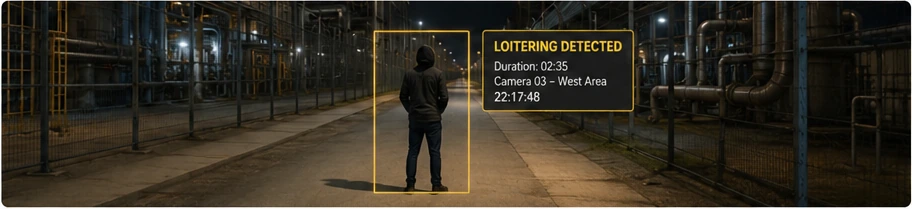
- Remain in a monitored area beyond an expected period.
This can improve situational awareness at vehicle entrances, service roads, industrial facilities, airports, parking areas and logistics sites.
AerVision cites detection of reverse movement through exit points and monitoring of vehicle flow through access-controlled zones in airport deployments.
Vehicle Movement Heatmaps
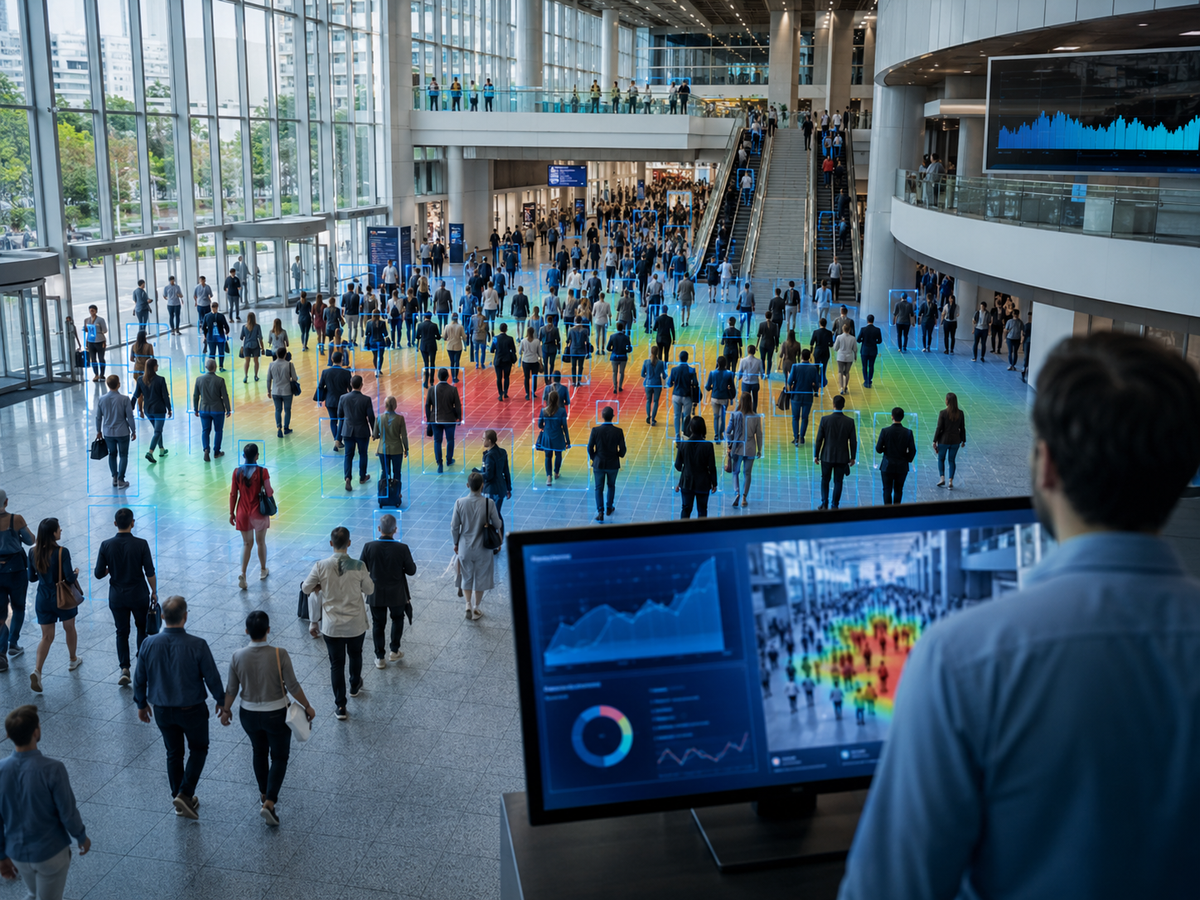
Vehicle movement can also be represented through heatmaps.
Heatmaps provide a visual indication of how traffic moves through an environment over time.
They can help organisations identify:
- Frequently used routes.
- High-traffic zones.
- Congested entrances.
- Underused lanes.
- Bottlenecks.
- Peak and off-peak periods.
- Areas where traffic patterns change.
- Locations requiring operational redesign.
AerWatch heatmaps can represent vehicle traffic over different time periods and can support reporting or integration with business-intelligence tools.
Applications Across Multiple Environments
Corporate and Government Facilities
AerWatch can automate the verification of authorised employee, visitor and contractor vehicles while maintaining a searchable record of entry and exit events.
Critical Infrastructure
Utilities, telecommunications sites, industrial facilities and other critical environments can use LPR to monitor controlled vehicle entrances and alert operators to unauthorised or restricted vehicles.
Oil, Gas and Industrial Sites
Licence plate recognition can support gate operations, contractor access, logistics monitoring, service-vehicle identification and vehicle movement across restricted areas.
Airports and Transportation Facilities
AerWatch can monitor vehicle flow through secure access points, service roads, parking areas, operational zones and controlled lanes.
Parking Facilities
LPR can support automated access, registration verification, entry and exit logging, authorised-vehicle management and investigation of parking events.
Residential and Commercial Properties
The platform can help manage resident, employee, visitor, delivery and service vehicles across entrances and parking areas.
Logistics and Warehousing
Vehicle records can support the monitoring of trucks, deliveries, loading areas, entrance queues and repeated vehicle movements.
Smart Cities and Public Roads
Vehicle counting, movement analysis and heatmaps can provide information about traffic volume, congestion and patterns across monitored roads and intersections.
Integration with Existing Cameras and Infrastructure
AerWatch can be designed to work with existing CCTV and VMS environments, subject to technical assessment.
Successful licence plate recognition depends on several factors, including:
- Camera position.
- Distance from the vehicle.
- Viewing angle.
- Plate size within the image.
- Vehicle speed.
- Lighting conditions.
- Headlight glare.
- Image resolution.
- Frame rate.
- Network performance.
- Environmental conditions.
- Plate format and condition.
A general-purpose overview camera may not always provide the image quality or viewing angle required for reliable plate recognition.
QRTD and the system integrator therefore review the intended use case and camera environment before finalising the solution.
Flexible Deployment Architecture
AerWatch licence plate recognition can be implemented for a single entrance or expanded across multiple gates, parking areas and sites.
The solution architecture can be designed according to:
- Number of cameras.
- Number of vehicle lanes.
- Expected traffic volume.
- Required retention.
- Search and reporting requirements.
- VMS integration.
- Access-control integration.
- Server and GPU requirements.
- Network topology.
- Cybersecurity policies.
- Availability and redundancy requirements.
- Centralised or distributed monitoring.
The deployment can begin with selected entrances and expand progressively as operational requirements develop.
Improving Security and Operational Efficiency
AerWatch supports both security and operational objectives.
The platform can help organisations:
- Automate vehicle identification.
- Reduce manual gate procedures.
- Improve vehicle-access records.
- Identify restricted or blacklisted vehicles.
- Accelerate investigations.
- Monitor traffic movement.
- Measure vehicle volumes.
- Identify congestion.
- Support parking operations.
- Improve visibility across multiple entrances.
- Associate access events with video evidence.
- Generate actionable reports.
The result is a more consistent and traceable approach to vehicle monitoring.
From Detection to Response
A recognised plate can initiate different actions depending on the organisation’s procedures and integrated systems.
Possible workflows include:
- Authorising access.
- Requesting operator confirmation.
- Generating an alarm.
- Displaying the associated camera.
- Opening the relevant video.
- Notifying security personnel.
- Recording the access event.
- Updating an external system.
- Triggering a gate-control process.
- Producing an audit record.
The appropriate workflow should be agreed during solution design and tested before deployment.

Why AerWatch?
AerWatch combines licence plate recognition with a wider AI video analytics platform.
The same environment can support:
- Licence plate recognition.
- Vehicle access verification.
- Vehicle counting.
- Direction monitoring.
- Restricted-zone detection.
- Vehicle movement analysis.
- Heatmaps.
- Real-time alerts.
- Searchable video events.
- Multi-site monitoring.
- Reporting and integration.
This avoids treating licence plate recognition as an isolated function and allows it to become part of a broader security and operational-intelligence architecture.
QRTD as AerVision’s Value-Added Distributor in Qatar
QRTD Information Technology enables system integrators, security contractors and technology partners to deliver AerVision solutions in Qatar.
QRTD’s value-added distribution services include:
- Use-case assessment.
- Solution architecture.
- Camera and infrastructure review.
- Technical and commercial pre-sales support.
- Product demonstrations.
- Proof-of-concept coordination.
- Licensing and quotation support.
- Server and system sizing.
- VMS and access-control integration guidance.
- Technical enablement.
- Training and knowledge transfer.
- Coordination with AerVision.
- Third-level technical escalation.
- Support throughout the solution lifecycle.
QRTD supports the channel and does not replace the system integrator’s role.
Installation, configuration, integration, commissioning and local maintenance can be delivered by qualified partners according to the requirements of each project.
Design the Right LPR Solution
Reliable licence plate recognition requires more than installing software.
Camera selection, positioning, lighting, vehicle speed, network design, server resources, VMS integration, gate equipment and operational workflows all influence the effectiveness of the solution.
QRTD works with AerVision, consultants and system integrators to evaluate these factors and design an appropriate architecture for each project.
Request an AerWatch Demonstration
Discover how AerWatch licence plate recognition and vehicle analytics can automate vehicle access, improve security and provide real-time operational insight.
Contact QRTD Information Technology to discuss your requirements, arrange a demonstration or evaluate a proof of concept in Qatar.